How to Do SEO Marketing: A Complete Beginner’s Guide
If you want your website to appear higher on Google and attract more relevant visitors without paying for every click, learning how to do SEO marketing is a great place to start. Search Engine Optimization (SEO) helps businesses improve their online visibility by making their websites more useful, accessible, and relevant to what people search for.
Whether you are a beginner, small-business owner, marketer, freelancer, or website owner, understanding how to do SEO for a website can help you generate consistent organic traffic and build long-term online visibility.
In this guide, you will learn what SEO is, how it works, the main types of SEO, and a practical step-by-step process for doing SEO marketing yourself.

What Is SEO in Digital Marketing?
SEO, or Search Engine Optimization, is the process of improving a website and its content so that search engines can better understand and rank its pages for relevant searches.
In digital marketing, SEO is primarily focused on earning organic search traffic rather than relying entirely on paid advertising.
For example, if someone searches for “digital marketing services in Calicut,” a business that has properly optimized its website may appear in the search results. When users click on the organic result, the business can receive visitors without paying for each individual click.
What Is SEO and How Does It Work?
Search engines such as Google generally discover, understand, and organize web pages before deciding which pages are most useful for a particular search.
A simplified SEO process looks like this:
Crawling → Indexing → Understanding relevance → Ranking → User visit
Your goal is to make it easy for search engines and users to understand:
What your website is about
What each page offers
Which search queries your content answers
Whether your information is useful and trustworthy
Whether your website provides a good user experience
This is why SEO is more than simply adding keywords to a webpage.
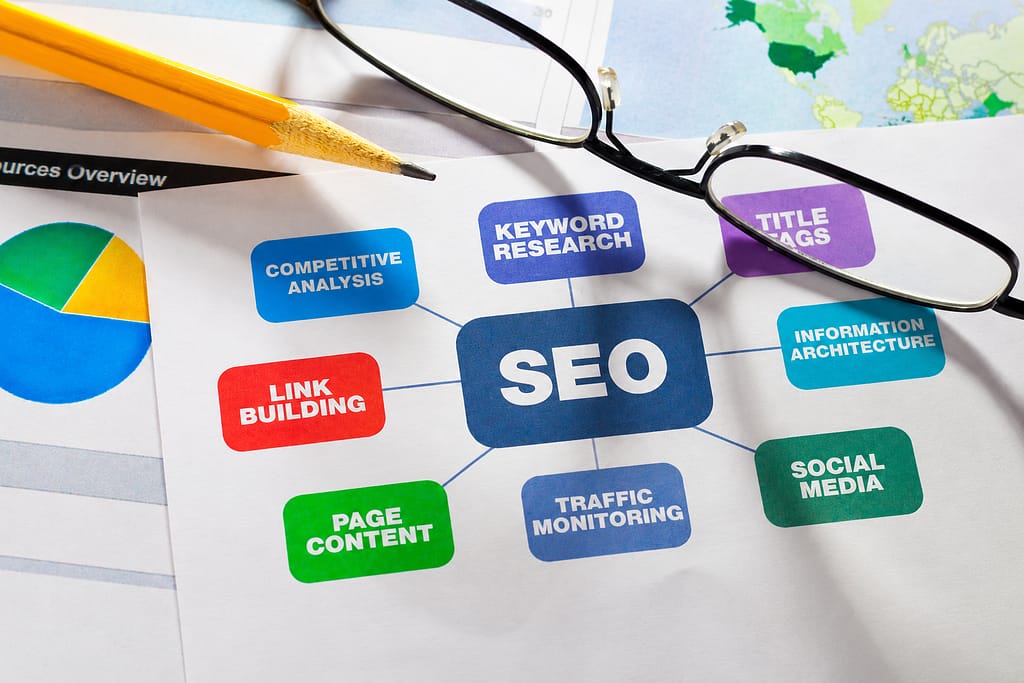
How to Do SEO Marketing for Beginners
If you are wondering how to do SEO marketing for beginners, start with the fundamentals instead of trying to optimize everything at once.
1. Define Your SEO Goal
Before making changes to your website, decide what you want SEO to achieve.
Your goal could be:
- Increase organic website traffic
- Generate leads
- Get more local customers
- Promote products or services
- Increase online visibility
- Build brand authority
A clear goal helps you choose the right keywords, content topics, and SEO strategy.
2. Find the Right Keywords
Keyword research is one of the most important parts of learning how to do SEO marketing.
Look for search terms that your target audience actually uses. Consider search intent, relevance, competition, and the potential value of the keyword to your business.
For example, a digital marketing agency might target keywords such as:
- Digital marketing services
- SEO services
- SEO consultant
- Local SEO services
- How to do SEO for a website
- SEO marketing for small businesses
Instead of repeatedly using one keyword, create content around closely related topics and questions.
3. Optimize Your Website’s Pages
On-page SEO involves optimizing individual webpages for both search engines and users.
Important elements include:
- Page title
- Meta description
- URL
- Main heading
- Subheadings
- Introduction
- Body content
- Internal links
- Image alt text
- Clear calls to action
Use your primary keyword naturally in important areas, but avoid keyword stuffing.
For example, if your primary keyword is how to do SEO marketing, it can appear in the title, introduction, a relevant heading, and naturally throughout the article.
4. Create Helpful, Search-Focused Content
High-quality content is a major part of successful SEO.
Instead of writing an article only to include keywords, identify the problem behind the search and provide a useful solution.
For example, someone searching “how to do SEO for a website step-by-step” probably wants a practical process. Your content should therefore explain the process clearly instead of giving only a definition.
A strong SEO article should be:
- Helpful
- Easy to understand
- Well structured
- Original
- Relevant to the search intent
- Updated when necessary
Answering related questions can also make content more useful for conversational and AI-powered search experiences.
5. Improve Technical SEO
Technical SEO focuses on making your website easier for search engines to crawl and users to navigate.
Important areas include:
- Mobile responsiveness
- Website speed
- Secure HTTPS connection
- Crawlability
- Indexability
- XML sitemap
- Clean URL structure
- Broken-link management
- Proper redirects
- Structured data where appropriate
You do not need to become a developer to understand the basics of technical SEO. However, technical problems can sometimes prevent otherwise excellent content from performing well.
6. Build Internal and External Links
Internal links connect pages within your own website. They help users discover related information and help search engines understand the relationship between your pages.
For example, an article about SEO marketing could internally link to pages about:
- Local SEO
- Technical SEO
- Keyword research
- Content marketing
- Digital marketing services
External links can also be useful when they point users toward credible and relevant sources.
Backlinks from other reputable websites can strengthen your website’s authority, although quality and relevance are more important than simply collecting a large number of links.
7. Use Local SEO for Location-Based Businesses
If you operate a local business, learning how to do local SEO marketing is especially important.
Local SEO helps businesses become more visible for searches with local intent, such as:
“SEO consultant near me”
“Digital marketing agency in Calicut”
“Best SEO services in Kerala”
Start by creating and maintaining an accurate Google Business Profile. Make sure your business information is consistent across important online platforms.
You can also improve local visibility through location-specific website pages, useful local content, customer reviews, and relevant local links.
Types of SEO in Digital Marketing
Understanding the different types of SEO makes it easier to create a balanced strategy.
On-Page SEO
On-page SEO focuses on content and elements you control on your website, including keywords, headings, titles, internal links, and content quality.
Technical SEO
Technical SEO focuses on crawling, indexing, website performance, mobile usability, structured data, and other technical aspects.
Off-Page SEO
Off-page SEO involves activities outside your website that can contribute to its authority and reputation, particularly relevant backlinks and brand mentions.
Local SEO
Local SEO focuses on improving visibility for searches connected to a specific location.
Together, these areas form an effective SEO foundation.
How to Do SEO Marketing: A Simple Example
Imagine you own a small digital marketing company.
You want to attract businesses searching for SEO services.
First, you research relevant search terms such as “SEO services in Calicut” and “local SEO consultant.”
Next, you create a service page targeting the appropriate search intent. You optimize the page title, headings, content, images, internal links, and metadata.
Then, you publish useful supporting content such as:
- How Local SEO Works
- SEO Tips for Small Businesses
- How to Optimize Google Business Profile
- Common SEO Mistakes Businesses Make
You internally link these articles to your main service page.
Finally, you promote useful content, build relevant relationships, monitor performance, and update pages based on search data.
This is a practical example of how to do SEO marketing as part of a broader digital marketing strategy.
How to Use SEO Marketing With Other Digital Channels
SEO does not have to work alone.
You can combine SEO with:
- Content marketing
- Social media marketing
- Email marketing
- Online advertising
- Video marketing
- Local marketing
For example, a blog post can attract organic traffic through SEO, be promoted through social media, and be converted into an email newsletter.
Although SEO and paid advertising are different strategies, they can complement each other. Paid campaigns can provide immediate visibility while SEO focuses on building sustainable organic visibility over time.

How to Do Your Own SEO Marketing
If you want to do your own SEO marketing, start small.
Choose a few important pages, research relevant keywords, improve the content, fix obvious technical problems, create useful supporting articles, and monitor your results.
Useful performance indicators include:
- Organic clicks
- Search impressions
- Search rankings
- Organic conversions
- Engagement
- Leads or sales
SEO is not usually an overnight strategy. Consistent improvement, useful content, technical health, and ongoing measurement are important for long-term results.
How to Do Google SEO Marketing in the AI Search Era
Modern search is becoming increasingly conversational. People may ask complete questions instead of typing short keywords.
For example:
“What is the easiest way for a small business to improve its Google visibility?”
This means SEO content should be written for people first.
Use clear headings, direct answers, descriptive language, useful examples, and logically organized information. Include relevant questions naturally rather than creating separate sections simply to repeat keywords.
AI-powered search experiences also make it increasingly important for businesses to demonstrate expertise, provide accurate information, and maintain a trustworthy online presence.
How to Get Into SEO Marketing as a Career
If you are interested in how to get into SEO marketing, begin by learning keyword research, on-page SEO, technical SEO, local SEO, content strategy, analytics, and search intent.
The best way to learn is through practical projects.
You can create your own website, optimize pages, publish content, monitor search performance, and build an SEO portfolio. Real projects can help you understand how SEO works beyond theory.
Final Thoughts
Learning how to do SEO marketing is about much more than placing keywords on a webpage. Effective SEO combines keyword research, helpful content, on-page optimization, technical improvements, internal linking, authority building, local visibility, and continuous measurement.
If you are a beginner, start with the basics: understand your audience, identify relevant search queries, create genuinely useful content, optimize your website, and track what happens.
SEO is a long-term digital marketing strategy. When done consistently and with the user’s search intent in mind, it can help your website earn greater visibility, attract relevant visitors, and create sustainable business opportunities.
Quick SEO Checklist
Before publishing an SEO page, ask:
☐ Is the target keyword relevant to the page?
☐ Does the content satisfy the user’s search intent?
☐ Is the primary keyword used naturally?
☐ Are related keywords and questions covered?
☐ Is the title clear and compelling?
☐ Is the URL simple and descriptive?
☐ Are headings logically organized?
☐ Are internal links included?
☐ Is the page mobile-friendly?
☐ Are images optimized with descriptive alt text?
☐ Does the page provide original value?
☐ Have you planned how to measure its performance?
If the answer is yes, you have a strong foundation for implementing SEO and improving your website’s search visibility.
SEO implementation note: For this ~1,000-word article, I recommend keeping “how to do SEO marketing” around 0.8–1.2% overall rather than forcing an exact percentage. That gives you roughly 8–12 natural uses, while variations such as how to do SEO for a website, how to do local SEO marketing, and how to do your own SEO marketing provide semantic coverage without keyword stuffing.
For the page itself, a good starting SEO title would be: “How to Do SEO Marketing: Complete Beginner’s Guide”, with the primary keyword near the beginning of the title and a concise meta description explaining the step-by-step process.
